

Malankara Jacobite Syrian Church
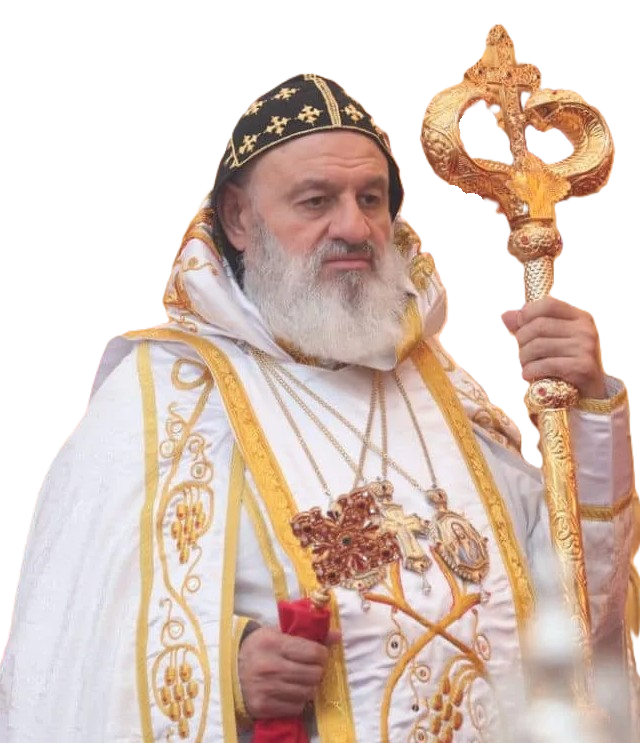
The Syriac Orthodox Church of India, formally known as the Jacobite Syrian Christian Church, stands as the authentic continuation of the apostolic faith planted in India by St. Thomas the Apostle in 52 AD. As an integral and inseparable part of the Syriac Orthodox Church of Antioch, it acknowledges the Patriarch of Antioch and All the East as its supreme spiritual head, preserving the ancient bond between the See of St. Peter at Antioch.
The Syriac Orthodox Church of Antioch: Our Mother Church
The Syriac Orthodox Church of Antioch stands as one of the most ancient autocephalous Oriental Orthodox Churches in Christendom, tracing its unbroken episcopal succession from the Apostolic See established by St. Peter himself at Antioch in the first century. As the successor to that apostolic See, the Patriarch of Antioch and All the East holds the highest ecclesiastical authority within our Church, serving as the supreme guardian of the Orthodox faith, the protector of apostolic tradition, and the overseer of all dioceses and parishes dispersed throughout the world. This Church, which has endured nearly two thousand years of trials, persecutions, and theological challenges while steadfastly maintaining the pure apostolic faith, represents the living and vibrant continuation of the Johannine theological tradition as expressed through the West Syriac liturgical and doctrinal heritage. The Syriac Orthodox Church employs the Divine Liturgy of St. James the Apostle, the most ancient of all extant liturgical formularies, and preserves the riches of Syriac ecclesiastical scholarship through its venerable theological schools, monastic traditions, and liturgical patrimony.
The Patriarch of Antioch, successor to St. Peter and keeper of the Apostolic See, exercises supreme patriarchal jurisdiction over all the faithful of the Syriac Orthodox Church, whether in the ancient lands of the Middle East, the diaspora communities in Europe and North America, or the vibrant churches of India. This patriarchal authority is not merely administrative but deeply rooted in apostolic succession and sacramental theology. It is through the Patriarch that the entire Orthodox Church maintains its doctrinal unity, liturgical coherence, and canonical order. The Patriarch alone possesses the authority to consecrate the Holy Mooron (Sacred Chrism), to ordain metropolitans and bishops, to establish and reorganize dioceses, and to pronounce definitive judgments on matters of faith and discipline. The title "Patriarch of Antioch and All the East" itself affirms the universal scope of this jurisdiction, acknowledging that all Eastern Orthodox Churches, regardless of geography, are united under the headship of the Antiochene See.
The Malankara Jacobite Syrian Church
The Malankara Jacobite Syrian Church represents the flourishing expression of the Syriac Orthodox faith within the Indian subcontinent, having been established when the Apostle Thomas himself brought the Gospel to Kerala's shores in 52 AD, establishing seven communities of believers and seven churches in the region. The term "Malankara" derives from the Malayalam words "Mala" (hill) and "Ankara" (region), denoting the geographical territory comprising the Christian communities in the Kerala coast. For nearly nineteen centuries, these communities have preserved the apostolic faith, worshipped in the Syriac language, employed the liturgical treasures of the West Syriac tradition, and maintained an unbroken line of bishops tracing their apostolic succession. The Malankara Church thus stands as a living bridge between the ancient Christian East and the vibrant Orthodox presence in Asia, embodying the fruits of the Apostle's missionary endeavor and the fidelity of countless generations of Indian Christian faithful.
The relationship between the Malankara Church and the Syriac Orthodox Church of Antioch is not one of colonial dependence or administrative convenience, but rather a profound expression of ecclesiological unity rooted in shared apostolic faith, common liturgical practice, identical doctrinal commitment, and sacramental communion. The Malankara faithful recognize themselves as constitutive members of the Universal Syriac Orthodox Church, partaking in the Antiochene theological tradition, venerating the same saints and martyrs, observing the same liturgical calendar, practicing the same ascetical disciplines, and participating in the same Eucharistic fellowship. The Patriarch of Antioch is, by theological necessity and ecclesiological truth, the supreme head of the Malankara Church, not as an external overlord but as the visible guarantor of apostolic continuity, doctrinal integrity, and sacramental validity. Through this bond with the Patriarchate of Antioch, the Malankara Church remains in living communion with the ancient mother church of Christian Antioch, preserves its link with the Syriac Orthodox communities of Syria, Iraq, Turkey, and the diaspora, and maintains its participation in the ecumenical fellowship of the Oriental Orthodox communion.
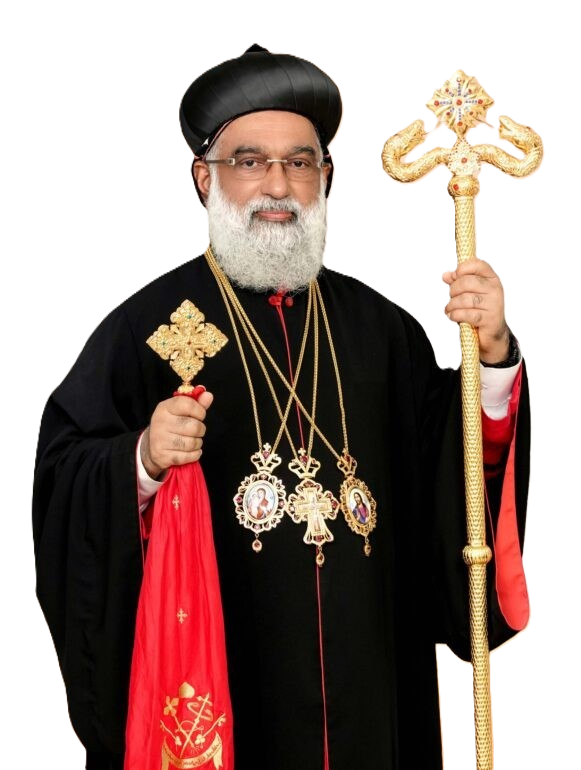
At the apex of the Church's hierarchy stands His Holiness Moran Mor Ignatius Aphrem II, the Patriarch of Antioch and All the East, Supreme Head of the Universal Syriac Orthodox Church. The local administration in India is entrusted to His Beatitude Aboon Mor Baselios Joseph, the Catholicos of India (Maphrian), who was elevated to this office on 25 March 2025 at St. Mary's Patriarchal Cathedral, Atchaneh, Lebanon, by the Patriarch himself. The Catholicos presides over the Holy Episcopal Synod of the Jacobite Syrian Christian Church, functioning as the Patriarch's deputy in India, second in ecclesiastical rank after the Patriarch.
Part I: Theological and Canonical Foundations
1.1 The Principle of Territorial Episcopacy in the Early Church
From the earliest centuries of Christianity, the Church has organized itself on a territorial basis. Each city or region had its own bishop, who exercised pastoral care over all the faithful within his defined territory. This principle appears in the canons of Nicaea (325 AD) and was reaffirmed by subsequent councils. Canon 8 of Nicaea, for example, presupposes territorial jurisdiction, and Canon 2 of Constantinople (381 AD) explicitly mandates that bishops not interfere in dioceses outside their territorial competence.
The Apostolic Canons, revered in the Syriac Orthodox canonical tradition, likewise insist on defined jurisdictional boundaries. Canon 34 of the Apostolic Canons establishes the principle that the bishops of every nation must acknowledge the one among them who is first, and regard him as their head, without exceeding their own territorial jurisdiction. Canon 35 further prohibits a bishop from ordaining outside his own territory.
1.2 The Theological Rationale: Bishop as Sacramental Icon
Theologically, the bishop represents Christ to his flock and the flock to Christ. He is not merely an administrator but the celebrant of the Holy Qurbono (Eucharist) and the guardian of apostolic teaching in his locale. As St. Ignatius of Antioch wrote in his Epistle to the Smyrnaeans, "Where the bishop is, there let the people be, just as where Jesus Christ is, there is the Church."
For this sacramental role to function properly, there must be clarity about which bishop serves which community. Practically, territorial definition prevents jurisdictional conflicts, ensures pastoral coverage, and maintains order in the Church's governance. The Syriac Orthodox Church has consistently upheld this principle throughout its two-thousand-year history.
1.3 The Exclusive Patriarchal Prerogative of Diocesan Formation
It is essential to understand a foundational canonical principle: the creation, division, and reorganization of dioceses falls exclusively under the jurisdiction of the Patriarch of Antioch. This is not a synodal function. A synod may address matters of faith, discipline, liturgical practice, and pastoral governance, but the actual erection and delineation of dioceses — The appointment of territories and the consecration of bishops to govern them — Is a patriarchal prerogative inherent in the supreme apostolic authority of the See of Antioch.
This distinction is rooted in the very nature of patriarchal authority. The Patriarch, as the successor of St. Peter in the Antiochene See, possesses the fullness of jurisdictional authority over all the churches of the East. Canon 6 of Nicaea affirmed the ancient privileges of the great sees, including Antioch's authority over the East. Canon 2 of Constantinople (381 AD) reconfirmed this authority. The power to create dioceses, appoint bishops, and define territorial boundaries is an exercise of this supreme patriarchal jurisdiction that no synod, council, or metropolitan can claim for itself.
Thus, when His Holiness Patriarch Ignatius Peter IV divided Malankara into seven dioceses and consecrated six bishops during his apostolic visit of 1875–1877, he was acting within his exclusive canonical competence as the supreme head of the Syriac Orthodox Church. This was not a decision delegated to or arising from the Mulamthuruthy Synod; it was the Patriarch's own sovereign act of ecclesiastical governance.
1.4 The Antiochene Patriarchal Jurisdiction Over the East
The jurisdiction of the Patriarch of Antioch over the churches of the East is founded upon apostolic succession from St. Peter, confirmed by the ecumenical councils. The Malankara Church, as part of the Eastern jurisdiction, has always fallen under this Antiochene patriarchal authority. All bishops of the East must be in communion with the Patriarch of Antioch. A bishop in the East who is not in communion with the Holy See of Antioch is considered canonically invalid. This principle was solemnly reaffirmed during the Patriarch's visit to Malankara in 1875–1877, and the faithful formally acknowledged it through the Mulamthuruthy Padiyola.
Part II: Historical Background
2.1 The Apostolic Foundation and Early Centuries
According to the ancient and unbroken tradition of the St. Thomas Christians of Kerala, the Apostle Thomas arrived at Maliankara (Cranganore) in 52 AD and established seven churches at Maliankara (Kodungalloor), Palayoor, Kottakkavu (North Paravur), Kokkamangalam, Chayal (Nilackel), Niranam, and Kollam. These seven apostolic communities formed the nucleus of the Indian Church, which maintained its Syriac liturgical heritage and ecclesiastical communion with the Patriarchate of Antioch throughout the centuries.
In the early centuries, bishops from the Middle East were sent to serve the faithful in Malankara. The arrival of the Syrian fathers Mor Shabor and Mor Aphroth in the 9th century (circa 825 AD), along with the merchant Iyob and other Syrian prelates, strengthened the Church's bonds with the Syriac Orthodox tradition. The annual feast of these holy fathers continues to be celebrated by the Jacobite Syrian Christians, a living testimony to the unbroken connection with the Antiochene heritage.
2.2 The Single Metropolitanate System
For many centuries, the Malankara Church was governed by a single Metropolitan. From the time of Mor Gregorios Abdul Jaleel, who arrived in 1665 following the Coonan Cross Oath of 1653, the Church was served by a succession of metropolitans who bore various titular names, primarily in the Mar Thoma and later Dionysius lines.
While this single-metropolitan system served the Church during centuries when the faithful were concentrated in a limited geographical area, by the mid-nineteenth century, the growing population and expanding territorial spread of the community demanded a more structured hierarchical organization. The absence of clearly defined diocesan boundaries led to administrative confusion, jurisdictional ambiguity, and the dangerous tendency toward congregationalism.
2.3 The Crisis of the Mid-Nineteenth Century
The arrival of Anglican CMS missionaries in the early 19th century and the subsequent reform movement led by Palakkunnath Abraham Malpan created a theological crisis within the Malankara Church. The Mavelikara Padiyola of 1836 decisively rejected the Protestant reforms, affirming the Church's commitment to its Orthodox faith and Antiochene heritage. However, the aftermath of these controversies, particularly the disputes surrounding Mathews Mar Athanasius (who had embraced Reformed theology), created factions within the community.
It was in this context that the faithful of the Orthodox party invited the Patriarch of Antioch to visit Malankara personally. The Church needed not merely a patriarchal blessing but a comprehensive structural reorganization — Achievable only through the personal exercise of the Patriarch's supreme authority — That would ensure proper episcopal oversight, prevent the recurrence of factional disputes, and permanently establish canonical order in the Indian Church.
Part III: The Patriarchal Visit of 1875–1877
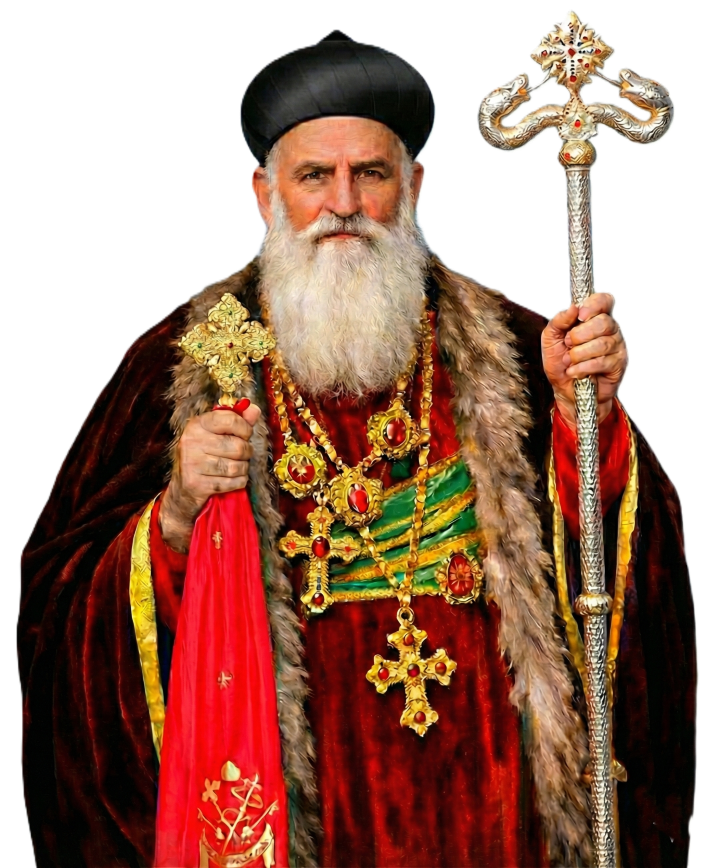
3.1 The Arrival of His Holiness Patriarch Ignatius Peter IV
His Holiness Ignatius Peter IV, the Patriarch of Antioch and All the East, arrived in Malankara in 1875, accompanied by a Syrian bishop, Mor Gregorios of Jerusalem, and his entourage. The Patriarch travelled via London and Madras before reaching Kerala. This was a momentous event — The personal visit of the supreme head of the Syriac Orthodox Church to the Indian faithful, an event of immense canonical and spiritual significance.
The Patriarch's stay in Malankara extended for almost a year, during which he travelled extensively, visited numerous churches, met with the faithful and clergy, and assessed the pastoral needs and canonical situation of the Church. His visit had multiple dimensions: spiritual renewal of the faithful, resolution of internal disputes, reaffirmation of patriarchal jurisdiction, and the structural reorganization of the Church in India.
3.2 The Mulamthuruthy Synod — June 1876
In June 1876, the Patriarch convened a canonical synod at the ancient St. Thomas Marthoman Church, Mulamthuruthy, one of the most venerable churches of Malankara (later honoured with the patriarchal appellation "The Second Jerusalem"). Representatives, both clergy and laity, from every parish assembled at this historic gathering. The Patriarch himself presided over the synod, making it a patriarchal synod possessing the highest ordinary canonical authority.
It is canonically important to understand the precise scope of the Synod's decisions. The Mulamthuruthy Synod addressed matters that appropriately fall within the competence of a synodal assembly:
Affirmation of the Orthodox Faith: The Synod resolved that the Malankara Church must closely adhere to the West Syriac doctrinal, liturgical, and disciplinary norms of the Syriac Orthodox Church.
Acknowledgment of Patriarchal Supremacy: The faithful formally declared their spiritual and canonical subjection to the Patriarch of Antioch, codifying the ancient relationship that had existed since apostolic times. A formal Padiyola (declaration document) was prepared to this effect.
Formation of the Syrian Christian Association: A democratic administrative body was established for the governance of the Malankara Church, combining hierarchical authority with conciliar participation of the laity.
Disciplinary and Pastoral Measures: Various measures were adopted for the proper ordering of parish life, the conduct of clergy, and the spiritual welfare of the community.
The Mulamthuruthy Padiyola, the formal declaration signed and submitted to the Patriarch, opens with the following affirmation of obedience: "Obeying your Holiness Kalpana... we have assembled... and we heard of our Holiness Circular Kalpana, read publicly on the occasion of the inauguration of the Synod, asking us to codify measures to the effect that we may be firm in the Orthodox faith and in the obedience to the commands from the Throne of Antioch."
3.3 Consecration of the Holy Mooron — A Landmark Sacramental Act
During his visit, the Patriarch consecrated the Holy Mooron (Chrism) on 27 August 1876 — The first time the Holy Chrism was consecrated in India. This act was of immense sacramental significance, as the consecration of the Mooron is a prerogative reserved to the Patriarch (or to those whom he specifically delegates). It symbolized that the Malankara Church was fully and sacramentally integrated into the life of the Universal Syriac Orthodox Church. The Mooron was consecrated again at Mulamthuruthy in 1911 by Patriarch Ignatius Abdulla II during his visit.
Part IV: The Patriarchal Act of Diocesan Formation — The Seven Dioceses of Malankara
4.1 The Patriarch's Exclusive Canonical Authority
The division of the Malankara Church into seven dioceses was not a decision of the Mulamthuruthy Synod. This must be stated with canonical precision. The creation of dioceses, the delineation of territorial boundaries, and the consecration of bishops to govern those dioceses are acts that fall exclusively under the jurisdiction of the Patriarch of Antioch. No synod, however exalted, possesses the authority to create dioceses or consecrate bishops — These are prerogatives inherent in the patriarchal office itself.
His Holiness Patriarch Ignatius Peter IV, having personally assessed the pastoral needs of the Malankara Church during his extended visit, and having observed the vastness of the territory, the growing number of the faithful, and the insufficiency of a single metropolitan to adequately shepherd the entire community, exercised his supreme patriarchal authority to divide the Church into seven territorial dioceses. This was the Patriarch's own sovereign canonical act, flowing from the fullness of apostolic jurisdiction vested in the See of Antioch.
4.2 The Consecration of Six Bishops
At St. Thomas Church, North Paravur, His Holiness Patriarch Ignatius Peter IV personally consecrated six priests as bishops. Together with the existing Malankara Metropolitan, Pulikkottil Joseph Mar Dionysius V (who had been consecrated in 1865), this constituted a college of seven bishops to shepherd seven dioceses. This was a watershed moment in Malankara Church history — The transition from a single-metropolitan system to a structured episcopal college governing defined territorial dioceses, accomplished through the direct exercise of patriarchal authority.
Before consecrating them, the Patriarch obtained registered agreements from each of the new bishops, ensuring their loyalty and obedience to the Patriarch of Antioch and affirming their commitment to govern their respective dioceses in accordance with the canons of the Syriac Orthodox Church. This act of obtaining formal commitments underscores the personal and direct nature of the patriarchal authority exercised in this reorganization.
4.3 The Seven Dioceses and Their First Bishops
The seven dioceses established by the Patriarch, and the bishops he appointed to govern them, were:
| Diocese | First Metropolitan / Bishop |
|---|---|
| Kollam Diocese | Pulikkottil Joseph Mar Dionysius V (Malankara Metropolitan) |
| Niranam Diocese | Chathuruthy Geevarghese Mar Gregorios (St. Gregorios of Parumala) |
| Thumpamon Diocese | Konat Mar Julius |
| Kottayam Diocese | Kadavil Mar Athanasius |
| Kandanad Diocese | Murimattath Mar Ivanios |
| Kochi Diocese | Karottuveetil Semavun Mar Dionysius |
| Angamaly Diocese | Ambattu Mar Coorilos |
The Kollam Diocese, being the most extensive, stretching from Thiruvithamcode (the southernmost point) to Mavelikara, was entrusted to the existing Malankara Metropolitan, Mar Dionysius V. The remaining six newly created dioceses were distributed among the six freshly consecrated bishops, each receiving a defined territorial jurisdiction.
4.4 The Canonical Significance of This Patriarchal Act
The Patriarch's division of Malankara into seven dioceses accomplished several critically important canonical goals:
Prevention of Congregationalism: By assigning parishes to specific dioceses and bishops, the Patriarch prevented the emergence of congregational autonomy. Individual parishes could not claim independence from episcopal oversight.
Establishment of Clear Hierarchical Lines: Each parish knew which bishop it was under, each bishop knew his territorial competence, and all bishops knew they were under the Patriarch's supreme authority. The metropolitan of Malankara was now one among the college of bishops, not an undefined sole authority.
Reinforcement of Episcopal Accountability: Each bishop was directly accountable to the Patriarch of Antioch for his exercise of pastoral ministry within his diocese, through registered agreements obtained at the time of consecration.
Efficient Pastoral Care: With defined territories, bishops could focus their pastoral energies on specific communities rather than attempting to serve an undefined or contested population.
Permanent Establishment of Patriarchal Authority: By creating multiple dioceses and directly consecrating their bishops, the Patriarch ensured that the canonical structure of Malankara was built upon the foundation of patriarchal jurisdiction, not upon the personal authority of any single metropolitan.
It was these new bishops who formally and systematically strengthened not only the West Syriac liturgical and disciplinary character of their dioceses but also stabilized the jurisdictional claims of the Patriarch in Malankara for generations to come.
4.5 St. Gregorios of Parumala: The Model Bishop
Among the newly consecrated bishops, Chathuruthy Geevarghese Mar Gregorios (later canonized as St. Gregorios of Parumala) stands as the exemplary model of episcopal ministry. Born on 15 June 1848 at Mulamthuruthy, he was the youngest of the new bishops and was affectionately called "Kochu Thirumeni" (Little Bishop). He had served as the Patriarch's secretary and translator during the entire visit, and the Patriarch, being pleased with his devotion and ability, chose him for episcopal consecration.
He took charge of the Niranam Diocese and established his residence at Parumala, where he dedicated himself to a threefold ministry: diocesan administration, formation of clergy, and missionary witness of the Church through inner spiritual renewal. Immediately after their consecration, the new bishops undertook a special forty-day fasting vigil at Vettickal Dayara under the leadership of Mar Gregorios. This spiritual exercise was both symbolic and effective — Signifying the dawn of a new era of ordered episcopal ministry in Malankara.
Mar Gregorios also established schools at Kunnamkulam, Mulamthuruthy, Niranam, Thumpamon, Thiruvalla, and other places, believing that the Church should engage in educational activity without discriminating by gender or religion. He undertook a Holy Land pilgrimage in 1895 and published the earliest printed Malayalam travelogue, "Oorslem Yathra Vivaranam." He passed away on 2 November 1902 and was added to the Fifth Diptych of the Syriac Orthodox Church in 1987, the first saint to be canonized from Malankara.
Part V: Evolution and Expansion of the Diocesan Structure
5.1 Growth in the Early 20th Century
The seven original dioceses created by the Patriarch served as the foundation upon which the Church's hierarchical structure was progressively developed. As the faithful grew in number and spread across wider geographical areas, the Patriarch of Antioch authorized the creation of additional dioceses to ensure adequate pastoral care — This authority remaining at all times a patriarchal prerogative.
The Knanaya Archdiocese was established in 1910, recognizing the unique endogamous character of the Knanaya community whose ancestors migrated from the Middle East under Knai Thoma in 345 AD. This diocese was formed in recognition of the Knanaya people's distinct heritage and their historic role in maintaining the Antiochene Orthodox faith in Malankara. Its jurisdiction extends to all Knanaya Jacobite faithful worldwide, and its Archbishop is a member of the Synod of the Universal Syriac Orthodox Church.
5.2 The Maphrianate and the Catholicate in India
The office of the Maphrianate of the East, originally established in 629 AD at Tigrit (Tagrit) in Persia when the Patriarch of Antioch elevated St. Marutha (Marooso) as the first Maphriyono of the East, was abolished in 1860 by the Syriac Orthodox Synod held at Deyrul'al Zafran Monastery under Patriarch Ignatius Ya'qub II. The centre of the Maphrianate had been at St. Matthew's Dayro in Mosul, Iraq.
This ancient office was re-established in India in 1964 by the Universal Synod held at Kottayam, presided over by Patriarch Mor Ignatius Ya'qub III. The head of this Maphrianate assumed the title Catholicos of the East, with jurisdiction over India. In 2002, the title was formally designated as Catholicos of India to reflect the actual jurisdictional scope.
The Catholicos functions as the Patriarch's deputy in India, presiding over the Holy Episcopal Synod and overseeing the administration of all dioceses in Malankara. In episcopal dignity, the Catholicos ranks second to the Patriarch. He and all the clergy and faithful of India pledge loyalty to the Patriarch of Antioch, the supreme authority of the Syriac Orthodox Church throughout the world. The headquarters of the Catholicate is at Patriarch Ignatius Zakka I Iwas Centre, Puthencruz, near Kochi, Kerala.
5.3 The Line of Catholici in India
| Catholicos | Period |
|---|---|
| Baselios Augen I | 1964–1975 (deposed by Syriac Orthodox Synod) |
| Baselios Paulose II | 1975–1996 |
| Baselios Thomas I | 2002–2024 |
| Baselios Joseph | 2025–present |
5.4 Expansion Beyond Kerala
As the faithful migrated to other parts of India and abroad, the Patriarch and the Catholicos authorized the creation of new dioceses, archdioceses, and patriarchal vicariates to serve the diaspora communities. These include dioceses in Delhi, Bangalore, Mylapore (Chennai), and missions in Mangalore (Honavar) and Chennai, as well as archdioceses and vicariates in North America, Europe, the Persian Gulf, Australia, and New Zealand. All of these dioceses are administered by Metropolitans appointed by or with the approval of the Patriarch of Antioch.
Part VI: The Present Diocesan Structure
6.1 Dioceses in Kerala
The following dioceses presently serve the Syriac Orthodox Church in Kerala, the heartland of the Malankara faithful:
| Diocese | Metropolitan / Bishop |
|---|---|
| Kollam Diocese | H.G. Mor Thevodosios Mathews |
| Niranam Diocese | H.G. Mor Coorilos Geevarghese (Asst: H.G. Mor Barnabas Geevarghese) |
| Thumpamon Diocese | H.G. Mor Militheos Yuhanon |
| Kottayam Diocese | H.G. Mor Themothios Thomas |
| Kandanad Diocese | H.G. Mor Ivanios Mathews |
| Angamaly – Perumbavoor Region | H.G. Mor Aphrem Mathews |
| Angamaly – High Range Region | H.G. Mor Athanasius Elias |
| Angamaly – Kothamangalam Region | H.G. Mor Julios Elias |
| Kozhikode Diocese | H.G. Mor Irenious Paulose |
| Thrissur Diocese | H.G. Mor Cleemis Kuriakose |
| Idukki Diocese | H.G. Mor Philaxinos Zakkaria |
| Malabar Diocese | H.G. Mor Stephanos Geevarghese |
6.2 Special Ecclesiastical Units in Kerala
| Unit | Metropolitan(s) |
|---|---|
| Simhasana Churches | H.G. Mor Dionysius Geevarghese, H.G. Mor Dioscoros Kuriakose, H.G. Mor Athanasius Geevarghese |
| EAE (Evangelistic Assoc. of the East) | H.G. Mor Chrysostomos Markose |
The Simhasana Churches (Throne Churches) represent ancient churches with special historical significance and direct patriarchal connections. The Evangelistic Association of the East (Pourasthya Suvisesha Samagam) is a missionary arm of the Church dedicated to evangelistic outreach.
6.3 Dioceses Outside Kerala (India)
| Diocese / Mission | Metropolitan / Bishop |
|---|---|
| Delhi Diocese | H.G. Mor Eusebius Kuriakose |
| Bangalore & Mylapore Dioceses | H.G. Mor Osthathios Isaac |
| Honavar Mission | H.G. Mor Anthonios Yacob |
| Chennai Mission | H.G. Mor Alexanthrayos Thomas |
6.4 Dioceses Outside India
| Diocese / Vicariate | Metropolitan / Bishop |
|---|---|
| USA & Canada Diocese | H.G. Mor Titus Yeldho |
| Europe Diocese | H.G. Mor Theophilos Kuriakose |
| Jerusalem & Midhyan Diocese | H.G. Mor Themotheos Mathews |
| Australia & New Zealand | Patriarchal Vicariate |
| Persian Gulf | Patriarchal Vicariate |
The Knanaya Archdiocese, the Simhasana Churches, the Evangelistic Association of the East, the North American Archdiocese, and the Europe Archdiocese are directly under the jurisdiction of the Patriarch of Antioch, while the Kerala dioceses and other Indian dioceses operate under the Catholicos of India within the overall patriarchal framework.
Part VII: The Hierarchical Chain — From Parish to Patriarch
7.1 The Hierarchical Order
The Malankara Jacobite Syrian Church maintains a clear and canonical hierarchical structure, reflecting the ancient Antiochene ecclesiological model:
- The Patriarch of Antioch and All the East — Supreme Head of the Universal Syriac Orthodox Church, with exclusive authority over the creation of dioceses, consecration of Catholicos, and all matters of supreme jurisdiction
- The Catholicos of India (Maphrian) — Head of the Church in India, second in rank after the Patriarch, presides over the Holy Episcopal Synod, ordained by and accountable to the Patriarch
- The Holy Episcopal Synod — The collective body of all metropolitans and bishops, governing the Church's spiritual and administrative affairs under the presidency of the Catholicos
- Diocesan Metropolitans / Bishops — Each metropolitan governs his diocese with pastoral authority, appointed by the Patriarch or with the Patriarch's approval
- Priests (Cor-Episcopos, Ramban, Kashisho) — Parish clergy serving under their diocesan bishop
- Deacons and the Laity — The faithful who constitute the Body of Christ in each parish
7.2 The Democratic Character of Parish Administration
A distinctive feature of the Malankara Jacobite Syrian Church is its uniquely democratic administrative character at the parish level. While spiritual authority flows through the apostolic hierarchy — From the Patriarch through the Catholicos and metropolitans to the parish priest — The administration of individual parishes rests with the parishioners through elected parish committees. The bishops guide spiritual matters and administer common diocesan properties, while individual church administration remains with the faithful.
This democratic structure came into existence in Malankara with the approval of the Mulamthuruthy Synod, conducted under the leadership of the Patriarch. The Jacobite Syrian Christian Church Association (JSCA), adopted in 2002, serves as the current constitutional framework, providing for representative governance while maintaining the canonical authority of the hierarchy under the Patriarch of Antioch.
Part VIII: Ecclesiological Significance of the Diocesan Structure
8.1 Preserving Apostolic Succession and Unity
The diocesan structure ensures that every parish and every faithful member of the Malankara Jacobite Syrian Church is connected, through a clear hierarchical chain, to the apostolic See of Antioch. This is not merely an organizational matter but a sacramental reality. The bishop, who derives his authority through episcopal consecration in apostolic succession, is the principal celebrant of the sacraments and the guardian of Orthodox teaching. Without the bishop, there can be no valid ordination, no consecration of the Holy Qurbono (in the strict sacramental sense), and no authoritative proclamation of the faith.
8.2 Safeguarding Against Schism and Congregationalism
The history of the Malankara Church has demonstrated the dangers of ambiguous jurisdictional arrangements. When bishops or metropolitans claim independent authority apart from the patriarchal see, or when individual parishes claim autonomy from episcopal oversight, the result is invariably schism, litigation, and spiritual harm. The clearly defined diocesan structure, rooted in patriarchal authority, serves as a canonical safeguard against these dangers.
As the Church has consistently affirmed, a bishop in the East who is not in communion with the Patriarch of Antioch is canonically invalid. The diocesan system, with its clear lines of accountability leading ultimately to the Patriarch, prevents the emergence of autonomous ecclesiastical entities that would fracture the unity of the Church.
8.3 The Living Legacy of the Patriarchal Reorganization
For the Jacobite Syrian Christian Church, the patriarchal act of diocesan formation in 1876 is not merely a historical event but a living constitutional foundation. The diocesan organization, the relationship with the Patriarch, and the role of the Catholicos all trace back to the canonical structure established by Patriarch Ignatius Peter IV through his personal exercise of patriarchal authority. The Patriarch articulated a clear ecclesial identity for the Malankara Syriac Orthodox faithful: they are Orthodox Christians in the Antiochene tradition, governed according to ancient canons, maintaining apostolic succession and sacramental theology, and participating in the universal Oriental Orthodox communion through their bond with the Patriarchate.
Part IX: Key Institutions
9.1 The Malankara Syrian Orthodox Theological Seminary
For the proper training of clergy who will serve in the various dioceses, the Malankara Syrian Orthodox Theological Seminary (MSOTS) functions at Udayagiri (Vettickal), near Mulamthuruthy. This seminary provides formation in Syriac Orthodox theology, liturgy, church history, canon law, and pastoral ministry, ensuring that the priests ordained for each diocese are well-prepared for their sacramental and pastoral responsibilities.
9.2 Church-Wide Organizational Bodies
Each diocese maintains its own organizational structure, supported by the following Church-wide bodies:
- Malankara Jacobite Syrian Sunday School Association (MJSSA) — Responsible for the catechetical formation of youth across all dioceses
- Malankara Jacobite Syrian Youth Association — Engaging the youth in ecclesial life and service
- Vanitha Samajam — The women's organization serving in each diocese.
Part X: Conclusion — Canonical Order and Apostolic Faithfulness
The diocesan structure of the Malankara Jacobite Syrian Church is the fruit of nearly two millennia of apostolic faithfulness, canonical development, and hierarchical order. From the seven churches founded by St. Thomas the Apostle in the first century to the comprehensive diocesan network of the twenty-first century, the Church has grown while maintaining its essential identity as an integral part of the Syriac Orthodox Church of Antioch.
The patriarchal act of His Holiness Patriarch Ignatius Peter IV in 1876, whereby he exercised his exclusive apostolic authority to divide Malankara into seven dioceses and consecrate bishops to govern them, stands as the foundational canonical event that formally established the diocesan system in India. It was not a rupture with the past but a reaffirmation and strengthening of ancient bonds. It was not an innovation but a restoration of proper canonical order according to apostolic tradition, effected through the very authority that the canons of Nicaea and Constantinople vested in the See of Antioch.
The Mulamthuruthy Synod, convened by the same Patriarch during his visit, addressed its own proper sphere: the affirmation of faith, the acknowledgment of patriarchal supremacy, the formation of administrative structures, and the codification of disciplinary norms. Together, the Patriarch's act of diocesan formation and the Synod's canonical declarations constituted a comprehensive renewal of the Malankara Church — Structural and spiritual, hierarchical and participatory.
Today, under the supreme headship of His Holiness Moran Mor Ignatius Aphrem II, Patriarch of Antioch and All the East, and the local leadership of His Beatitude Aboon Mor Baselios Joseph, Catholicos of India, the Malankara Jacobite Syrian Church continues to witness to this ancient faith through its ordered diocesan structure, its rich liturgical tradition employing the West Syriac Rite and the Liturgy of St. James, and its unwavering commitment to the unity of the Universal Syriac Orthodox Church.
May the Holy Triune God, who called this Church into being through the Apostle St.Peter, St.Thomas, who sustained it through centuries of trial, and who continues to guide it through the ministry of the Patriarchate of Antioch, grant His abundant blessings upon all the dioceses, their bishops, clergy, and faithful. Amen.